McKinsey recently found something counterintuitive about AI-driven customer care: a bank’s AI agent can hit a 90 percent containment rate on disputes, resolving nine out of ten calls without ever escalating, and the bank’s total cost per contact can still go up. If the customer calls back three days later because the root cause was never fixed, the bot didn’t solve anything. It just added a step. McKinsey is careful to note this isn’t a failure of the AI itself. It’s a failure of treating a technical metric, containment, as if it were a business outcome.
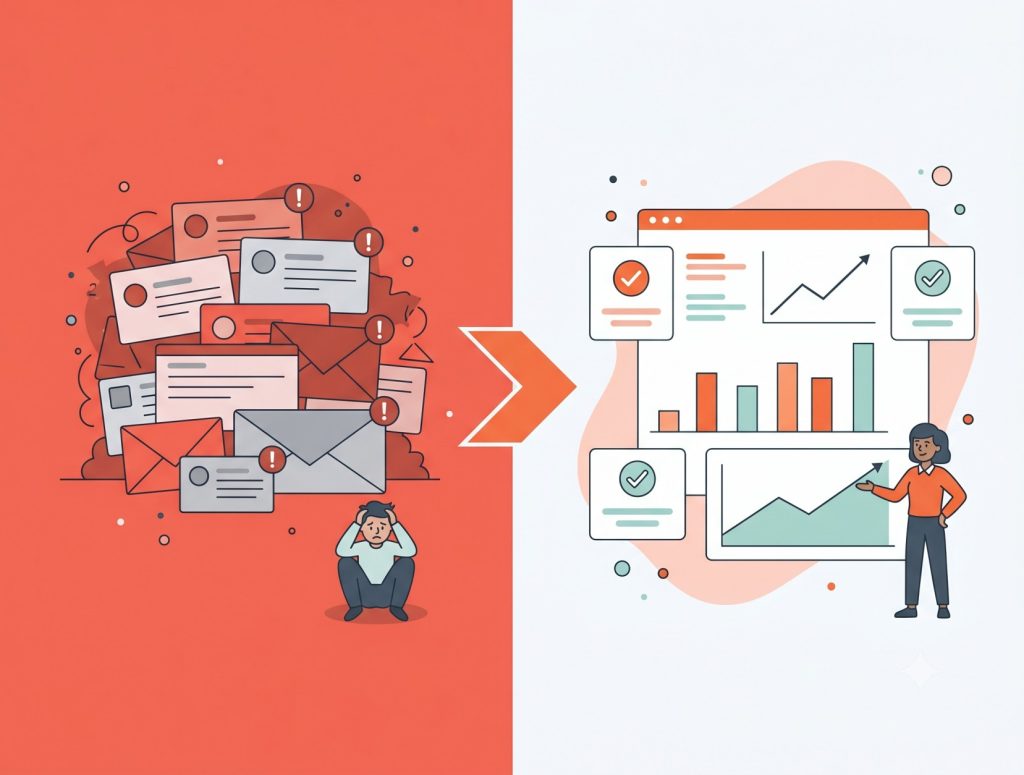
That gap between “ticket closed” and “problem solved” is playing out across every industry putting AI in front of customer support. Containment rates climb, and executives assume satisfaction is holding steady. But from the customer’s perspective, closing a ticket isn’t the same as solving the problem. They still hit a wall, still had to seek help, and still had to go through a resolution process. When teams measure success solely by containment rate, they miss a critical reality: managing case volume often hides the root causes of customer pain.
Kailey Maldonado, Support Leader at RETR, ran into this firsthand, and her team’s response is a useful example of both the problem and the fix.
RETR’s security system includes rate limits. If a user triggers too much activity too quickly, the account temporarily locks. That generated a steady stream of tickets asking what happened and how to fix it, the kind of straightforward question that’s tailor-made for an AI agent.
So Kailey had an AI bot answer them. The bot explained the lockout, told users to wait a few minutes, and closed the ticket. On paper, this is an AI success story: fast response, freed-up agent time, ticket resolved.
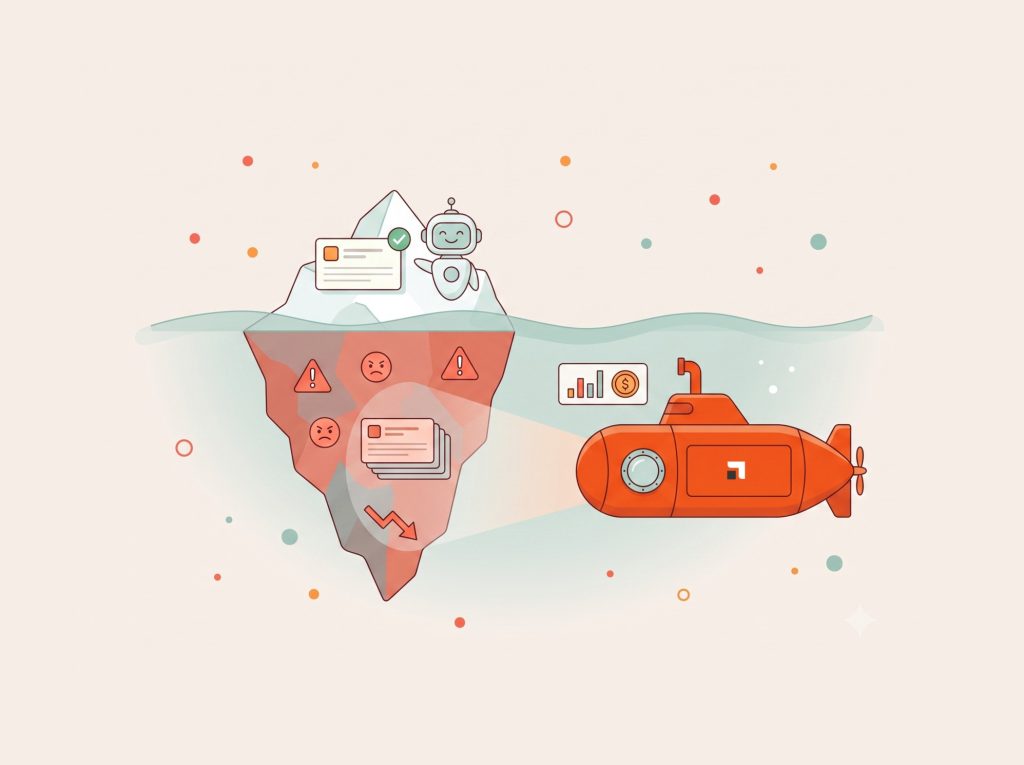
But Klarion, which analyzes every ticket regardless of whether AI or a human closed it, told a different story. It flagged the lockout as a repeating issue, one that was quietly frustrating customers every time it happened. Kailey saw the flaw before the dashboard did. “AI doesn’t resolve the issue,” she told Klarion CEO Jignesh Shah. “It gives them an explanation, but the problem is still there.” The lockout kept happening. The tickets kept coming.
Kailey’s instinct to chase the root cause behind a repeating issue lines up with how McKinsey describes the upside of doing this well. When companies pair AI with the kind of root-cause and journey-level fixes Kailey was after, McKinsey has found it can produce a 25 to 40 percent reduction in calls and a 10 to 15 point increase in customer satisfaction, gains that come from removing the friction itself rather than just answering faster.
That’s the prize sitting on the other side of the blind spot: not a better-looking containment rate, but fewer reasons for customers to need support.
Klarion’s visibility into the rate-limit pattern, and its impact on customers, gave Kailey the evidence to ask sharper questions:
That’s the shift from treating AI in Support as a ticket automation initiative to treating it as a strategic engine for Product improvement.
Most Support and Product leaders already want to ask these questions. What they lack is the data to answer them, especially once an AI agent is the one closing the loop and the pattern no longer lands in front of a human. That’s the gap a tool like Klarion is built to close: unpacking each “resolved” ticket into the specific issue behind it, then quantifying frequency, frustration, and revenue risk well enough to make the case to Product. Instead of “we get a lot of tickets about rate limits,” the conversation becomes: “this security trigger is frustrating our enterprise accounts, and fixing it resolves $150,000 in revenue risk.”
AI-powered support is more than a chatbot initiative. The opportunity in front of Support and Product leaders right now is to use AI for both halves of the job: answering the customer tickets and understanding the patterns sitting underneath them.
That second half is where the real advantage is. The teams that pair AI support agents with AI-powered visibility into customer pain get the best of both: faster responses today, and a constantly updating map of exactly where friction is building before it shows up as churn or reputation damage. They get to walk into the next executive review with evidence of elevated operational performance AND elevated product experience. That’s the version of AI-powered support worth building toward: not less visibility into the customer, but more.

Stay ahead with real-time insights and adapt quickly to changing market trends.


See how Klarion.ai turns customer support conversations and feedback into intelligent actions that elevate product quality, improve retention and protect reputation.
Get a demo